
Case studies
Field-Ready Cattle Inspection
Replacing unsupported inspection hardware without disrupting expert field workflows
Role
UX Designer (Lead UX/UI for BreedIT)
Sector
Livestock genetics & Cattle Breed Societies (New Zealand)
Users
Trained cattle inspectors, breed society administrators, researchers
Why reliable inspection data mattered
New Zealand cattle breed societies rely on inspection data to assess Traits Other Than Production (TOP) — foundational inputs for breeding decisions, genetic research, and national herd improvement programmes.
For decades, inspectors used legacy handheld devices that were:
- Near end-of-life and no longer supported
- Fragile in harsh field conditions
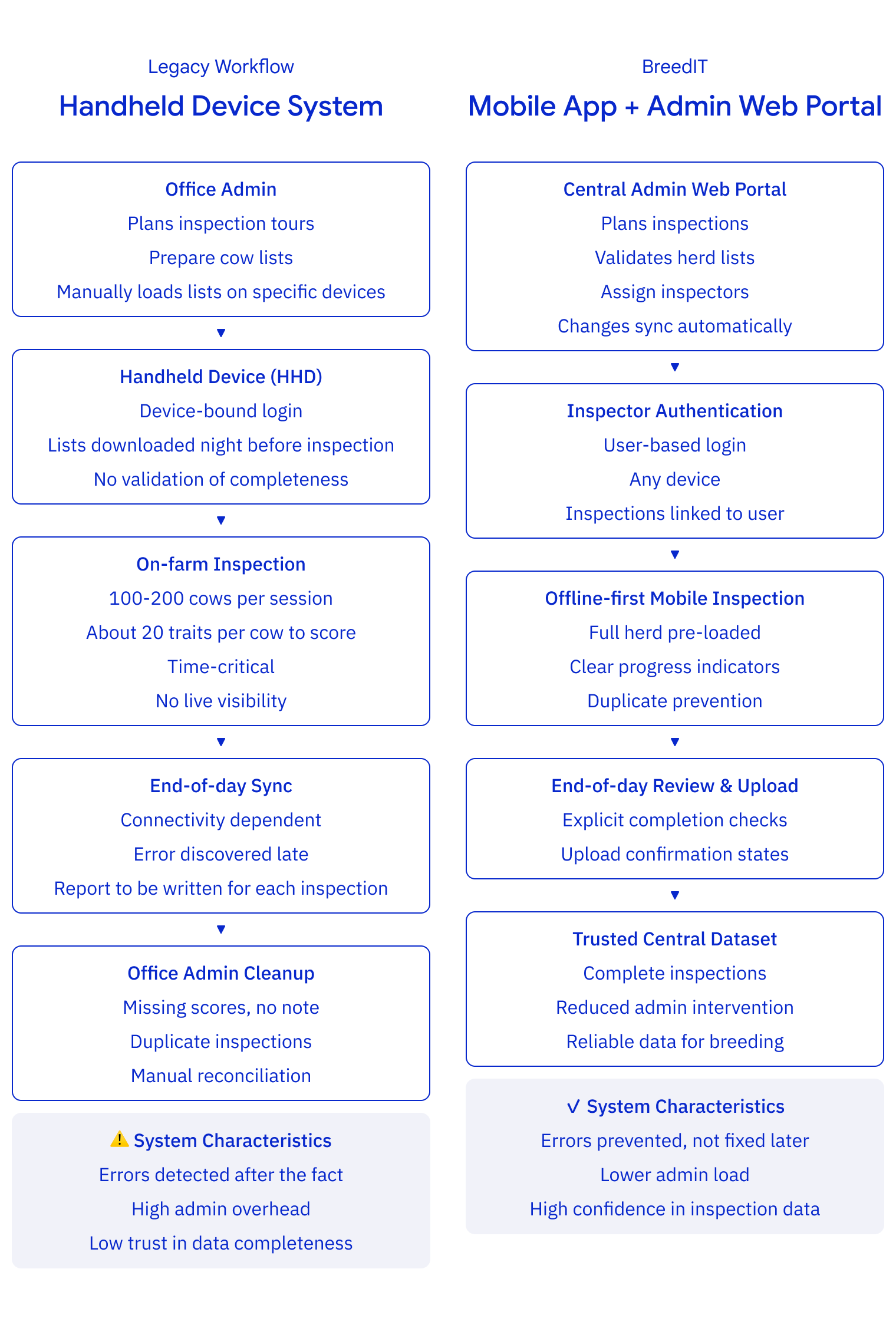
- Dependent on brittle, manual data syncing
Inspection sessions often involved:
- 100–200+ animals per farm
- ~20 traits scored per animal
- Remote locations with no connectivity
Failure to reliably capture or upload inspection data directly threatened the credibility of breed records.
Design challenge
How might we replace legacy hardware with a mobile solution that preserves inspector speed and accuracy while dramatically improving data reliability and system longevity?
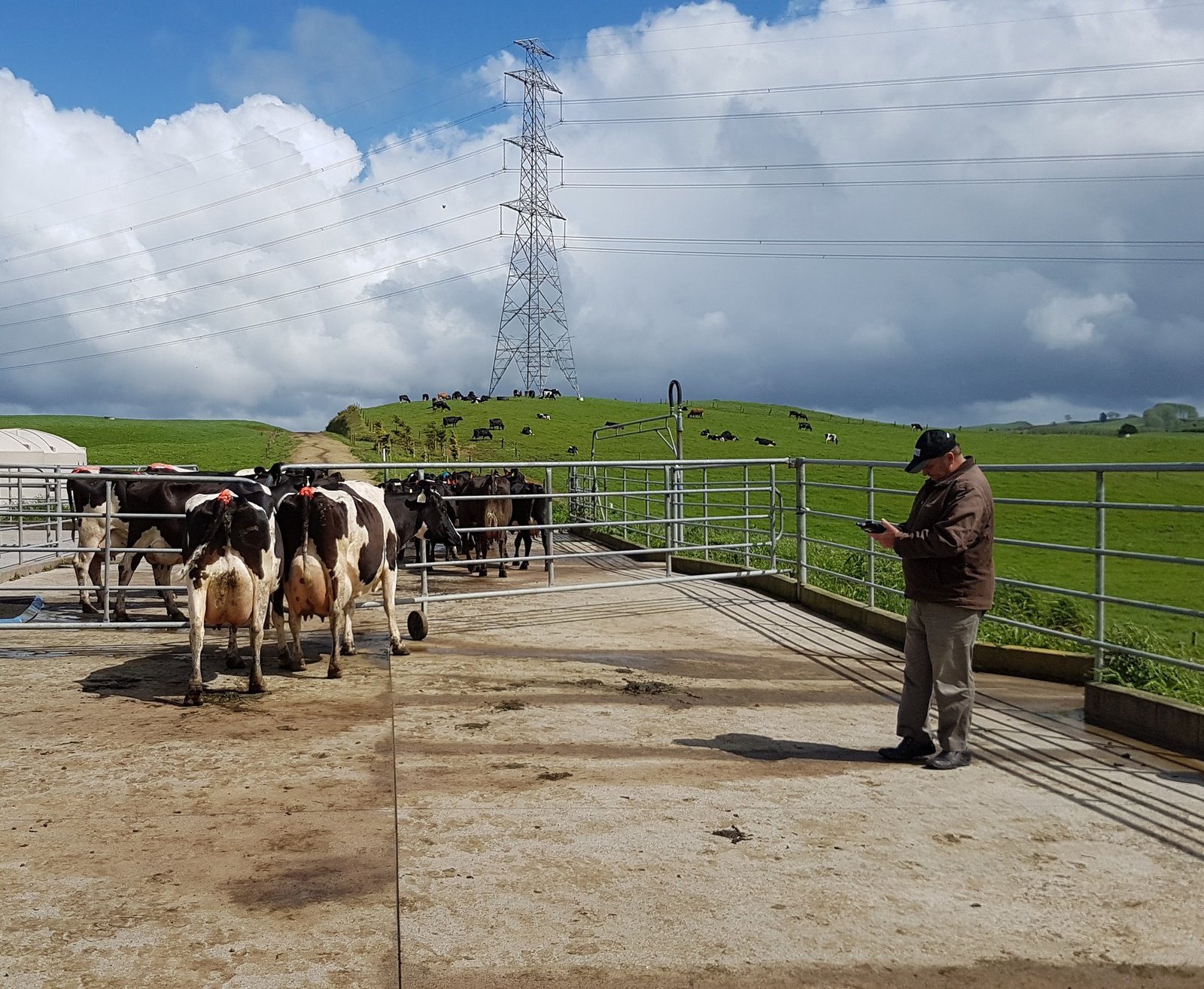
Replacing a fragile inspection workflow,
not just a device
Designing around real field constraints
Expert users needed speed, not guidance
Inspectors were experts. They did not want:
- Explanations
- Training overlays
- Visual embellishment
They wanted:
- Muscle-memory-friendly input
- Predictable interaction patterns
- Zero friction between animals
Preserve the expert workflow
Preserve expert workflows. Improve accuracy without slowing inspectors down.
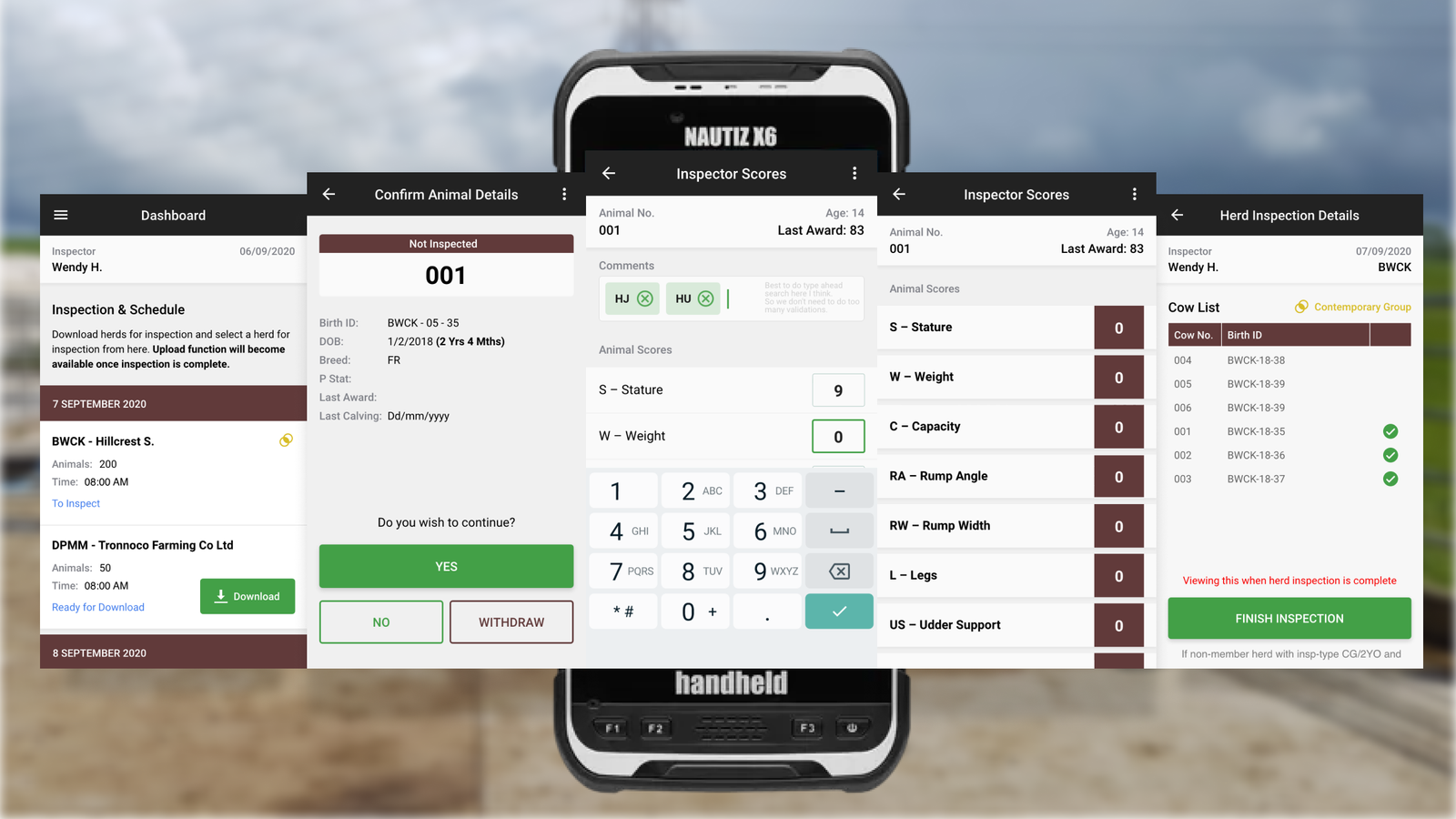
Making repeated trait scoring fast and reliable
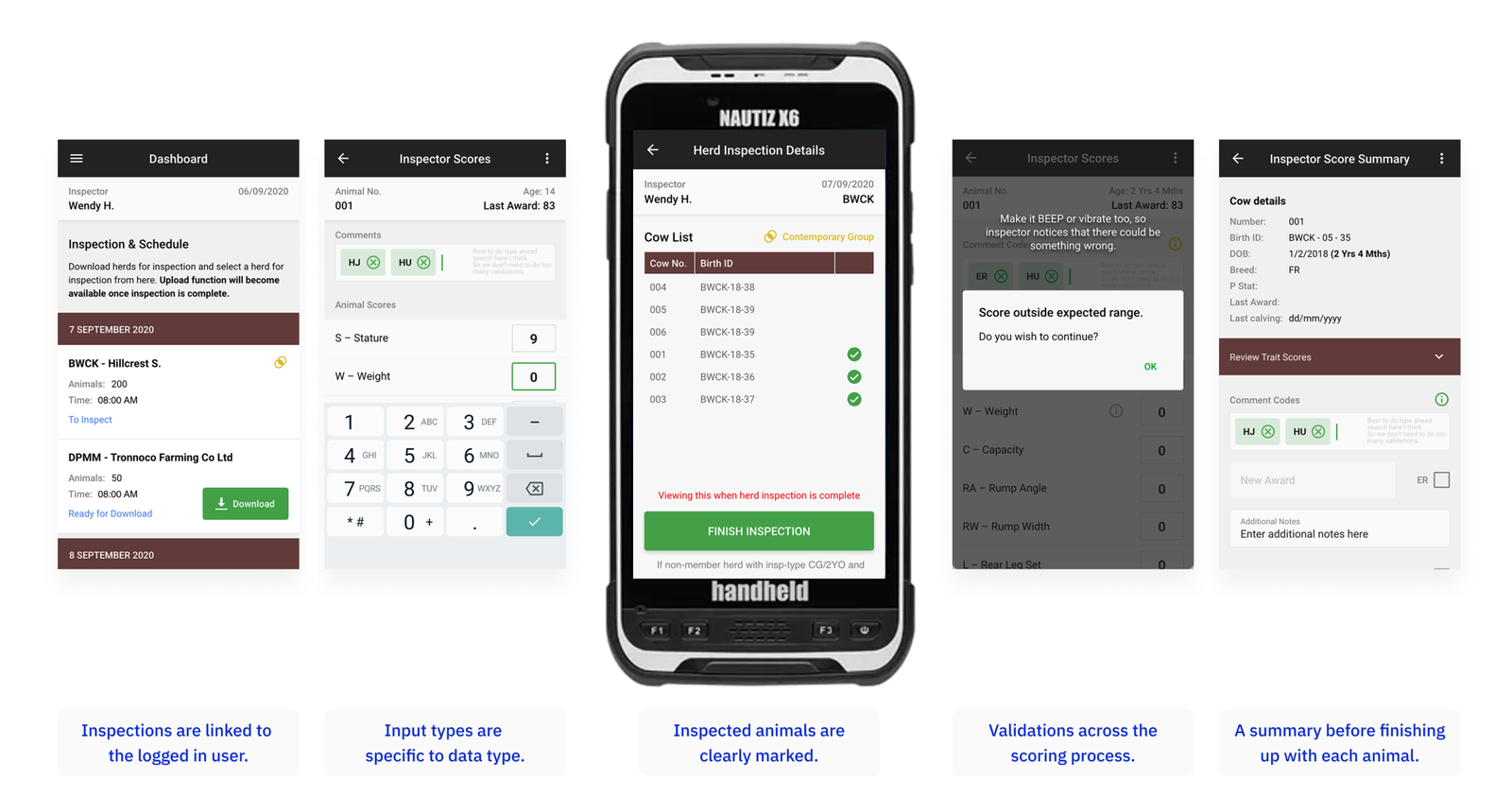
The scoring interface deliberately retained a familiar numeric model:
- Fixed trait scales (e.g. 1–9)
- Sequential progression through traits
- Minimal UI chrome
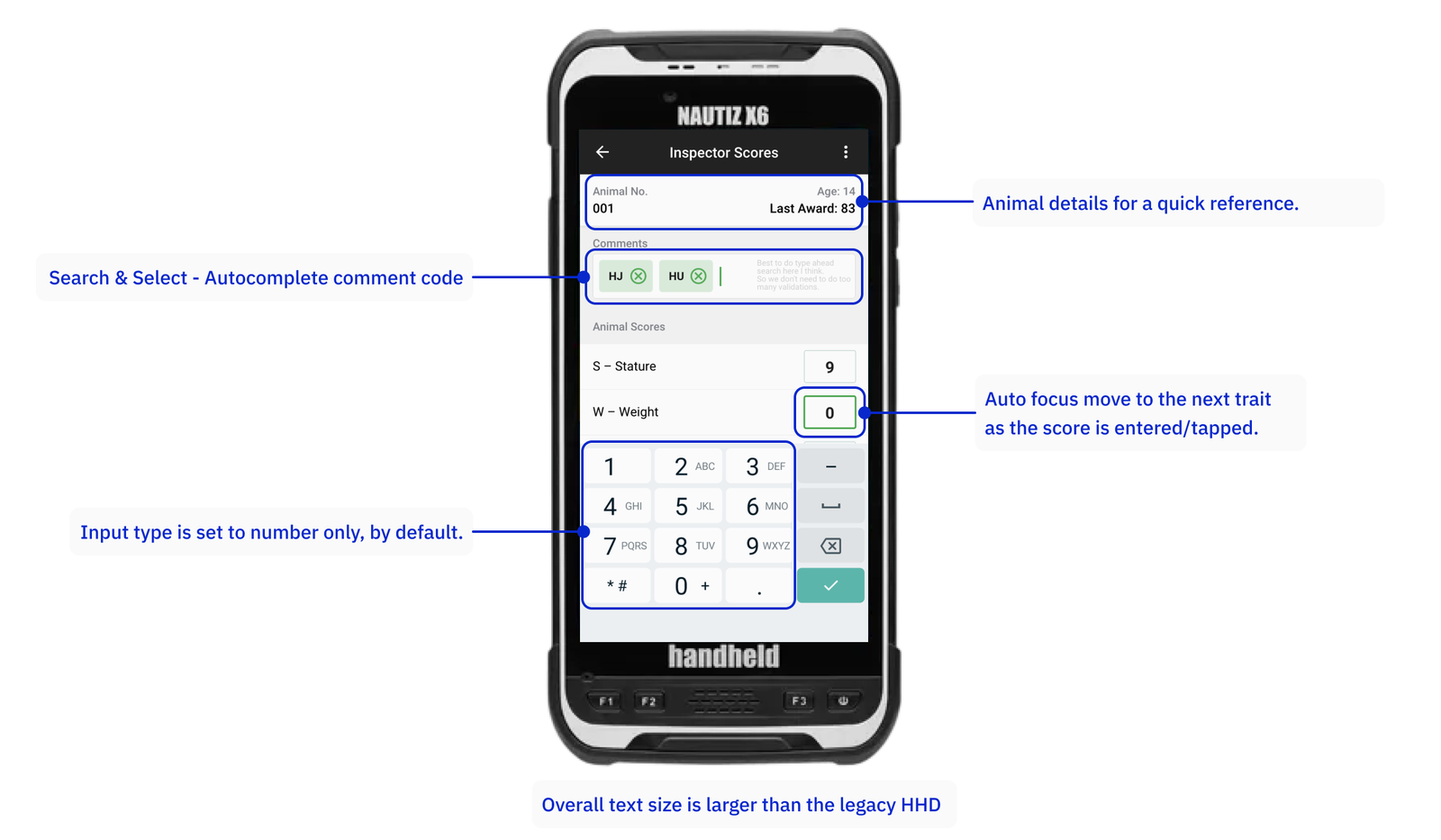
Enhancements focused on:
- Preventing invalid entries
- Clear completion states
- Immediate visual confirmation of recorded data
Every interaction was tested against the question:
Can this be done in seconds, repeatedly, without mistakes?
Designing beyond the field app
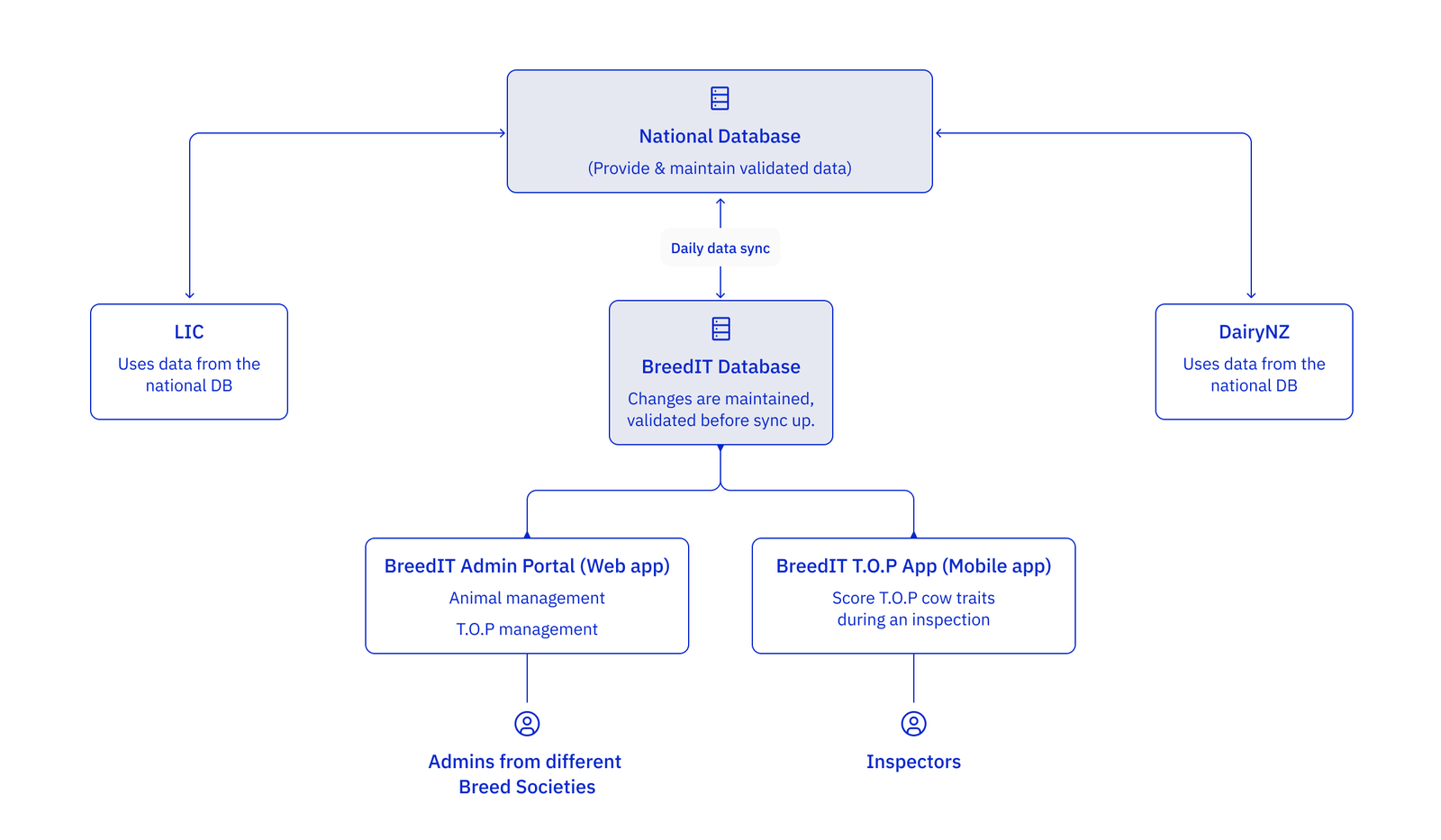
BreedIT sat inside a broader system:
- Inspectors in the field
- Breed society administrators
- Central genetic databases
- Research and reporting pipelines
Design decisions accounted for:
- Multi-inspector scenarios
- Large herd coordination
- Reduced admin setup and device dependency
Operational outcome
BreedIT successfully:
- Replaced unsupported legacy hardware
- Enabled reliable offline inspections
- Reduced administrative reconciliation work
- Preserved inspector speed and confidence
Most importantly, it restored confidence that inspection data collected in challenging field conditions could be trusted at national scale.
Reflection
BreedIT reinforced that ux design is often about what you choose not to change.
By respecting expert users, designing for real-world constraints, and focusing on data integrity over aesthetics, we delivered a system that works where it matters most — in the field.