
Case studies
Sire Team Tool
(Seasonal Genetic Decision Support)
Helping commercial sheep farmers track sire teams and understand genetic outcomes across seasons
Role
UX Designer
(Lead UX/UI on the project)
Client
Beef + Lamb New Zealand Genetics (Cool Sheep® Programme, co-funded by MPI)
Users
NZ commercial sheep farmers (owners, managers, farm staff)
Why this product matters
New Zealand’s sheep industry faces increasing pressure to demonstrate measurable reductions in greenhouse gas emissions, particularly methane. Through the Cool Sheep® Programme, Beef + Lamb New Zealand Genetics — co-funded by the Ministry for Primary Industries (MPI) — is enabling emissions reduction via genetic selection, rather than operational constraints.
Low-methane traits are already captured through the nProve breeder system, but commercial farmers lack a way to:
- Track which rams are actually used on farm
- Understand cumulative genetic impact across seasons
- Connect day-to-day mating decisions with long-term emissions goals
Without this connection, genetic progress is difficult to prove, confidence in decision-making is reduced, and the pathway to future incentives or assurance schemes is unclear.
The challenge:
How might we help commercial farmers track and understand the genetic impact of their sire teams — in a way that aligns with real seasonal workflows and builds trust in the data?
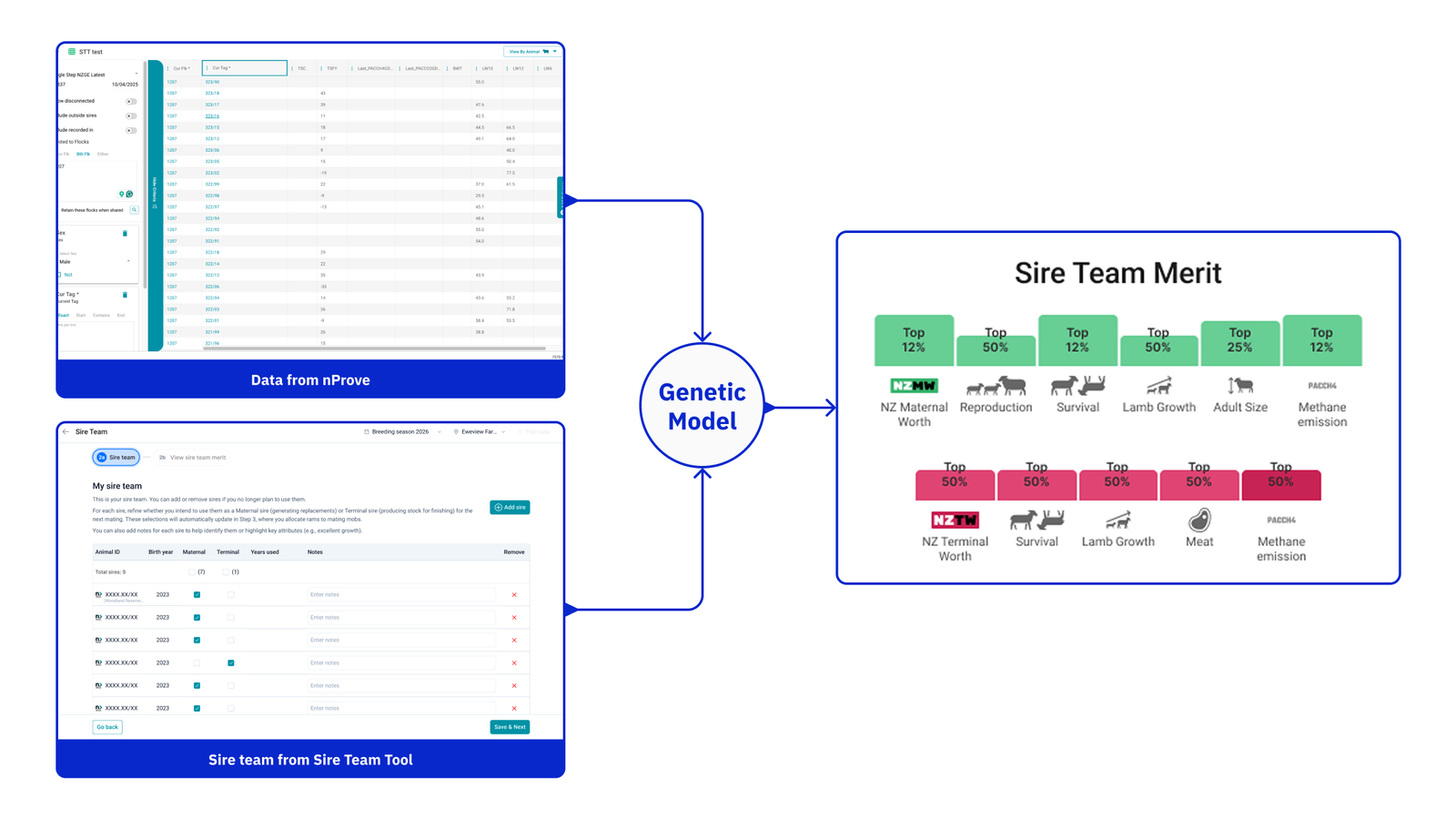
Where the existing process broke down
Before the Sire Team Tool:
- No reliable record after purchase
- Incomplete tracking weakened long-term insight
- Existing tools created more work, not better decisions
If sire tracking was incomplete or inaccurate:
- Genetic trends could not be assessed over time
- Ram buying relied on trial and error
- Opportunities to improve productivity and reduce emissions were missed
Existing systems and spreadsheets were not suitable:
- Genetic performance is cumulative and modelled
- Raw data is complex and time-consuming to interpret
- Farmers want guidance and outcomes, not more data entry
Designing around farming reality
- Seasonal usage: Engagement peaks around ram buying and mating seasons
- Trust & sensitivity: Genetic data is commercially and emotionally sensitive
- Data dependency: Genetic modelling relies on nProve; not all rams exist within it
- Data quality: Inconsistent animal ID formats complicate search and matching
- Policy requirements: MPI funding required methane traits to be included
- User mindset: Many farmers are resistant to tools that feel like extra admin
These constraints demanded a lightweight, purposeful design that was clearly beneficial.
What we learned from farmers
Farmers don’t want to manage genetics — they want confidence in their decisions. Research showed that:
- Genetic scores inform decisions, but physical assessment of rams still matters
- Farmers don’t want to reconstruct mating history later
- Insights are valued only if they require minimal effort
The intended direction was a seasonal decision-support tool rather than an animal-management system. Field research reinforced that direction: farmers valued genetic information when it supported real breeding decisions, but had little appetite for additional administration or reconstructing records later. These findings helped us assess feature ideas against the original product goal as the tool evolved.
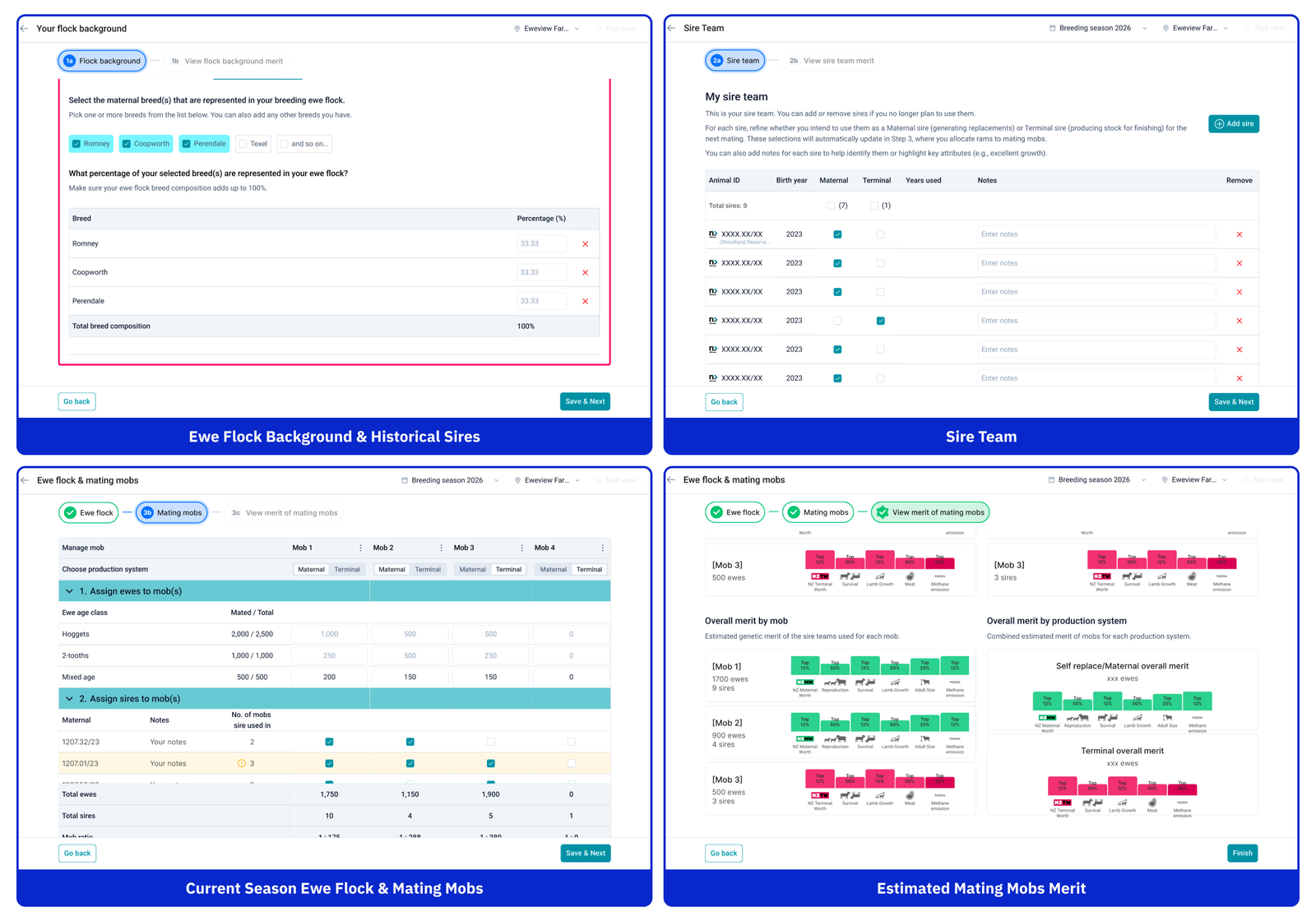
Turning seasonal decisions into the product structure
Organising the product around the farming season
The tool was structured around seasonal farming tasks, not system data structures. Instead of mirroring the legacy system, the experience follows how farmers actually work:
- Build a sire register
- Prepare rams for the season
- Create mating mobs
- Assign sires to mobs
- Review predicted genetic trends
This allowed the system to:
- Minimise required inputs
- Feed clean data into genetic models
- Present clear outcomes without exposing raw genetic data
Keeping the product deliberately focused
- No full animal management system
- No raw genetic data tables
- No complex, mandatory step-by-step flows
- No attempt to replace existing farm software
This restraint was critical to adoption and trust.
Working within the genetic data ecosystem
The Sire Team Tool depends on genetic data from nProve to ensure credibility.
Key design considerations included:
- Designing ram transfer and acceptance flows from breeders to farmers
- Reducing the need for manual animal ID searches
- Accounting for inconsistent ID formats in search logic
- Planning iterative improvements using real-world data
Only trusted data from nProve is used in genetic calculations, ensuring alignment with MPI objectives and scientific integrity.
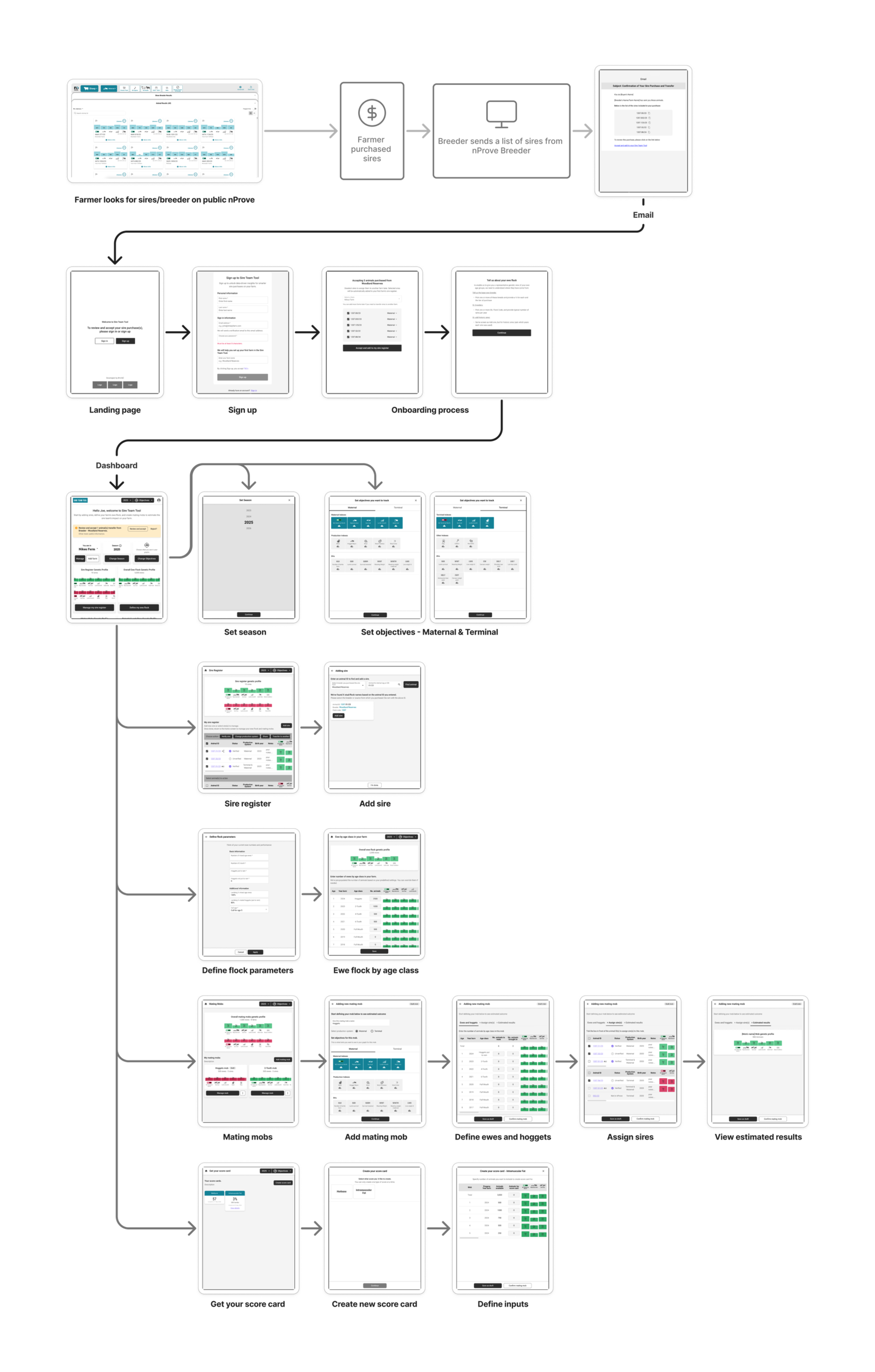
Turning stakeholder input into design decisions
I worked with the Product Owner, project managers, business analysts, scientists, data modellers and developers to translate stakeholder ideas and domain requirements into feasible design options. I used user evidence, workflow constraints and prototypes to make trade-offs visible and support scope and feature decisions.
Validation and current status
The tool is currently in development, but early indicators are strong:
- Positive feedback during user interviews and Fieldays validation
- High interest from farmers already engaged with nProve breeders
- Alignment across stakeholders on an adoption-first MVP
Expected long-term impact includes:
- More confident ram buying decisions
- Clearer genetic direction across seasons
- A credible pathway to demonstrate methane reduction through genetics
- Stronger alignment between farmers, breeders, and national climate goals
Reflection
The biggest lesson was the value of restraint. With complex genetics, multiple stakeholders and strong domain requirements, adding capability was easy; keeping the experience focused on the farmer's seasonal decisions was harder. Validating that focus with farmers helped the team maintain a useful product without creating another administrative burden.